

A Quick History of Smith & Wesson Firearms
By meticulously tracing the lineage of firearms innovation, one inevitably encounters the name Smith & Wesson. This isn’t just a chronicle of weapons; it’s the captivating narrative of how the Model 3 American revolver paved the way for the sophisticated rifles we see today, a journey through ingenuity, partnerships, and enduring impact on the world of firearms.
The Genesis of an Arms Empire
The story of Smith & Wesson begins in 1852, a year that marked the genesis of a partnership destined to reshape the firearms landscape. Horace Smith and Daniel B. Wesson, the very names etched into the company’s identity, honed their expertise in the intricacies of firearm manufacturing while employed at the National Armory in Springfield, Massachusetts. Daniel B. Wesson’s apprenticeship under his brother Edwin during the 1840s further solidified his foundation in the trade, setting the stage for their future collaboration.
Interestingly, their initial foray into the pistol market was far from a triumphant success. The fledgling company faced considerable financial challenges just a few short years after its inception. In a pivotal and undoubtedly difficult decision, Smith and Wesson chose to relinquish ownership to a shirt manufacturer. This individual, though perhaps not immediately recognized for his sartorial contributions, was none other than Oliver Winchester, a name that would later become synonymous with another iconic firearms brand.


By 1866, Winchester’s company embarked on the production of arms, ingeniously utilizing the lever-action design that Smith and Wesson had originally conceived. This marked the birth of the Winchester Repeating Arms Co., a direct descendant, in a way, of the initial Smith & Wesson vision.
The Power of Patents and Innovation
Even with Winchester’s rise, Smith and Wesson continued their collaboration. The pair embarked on a new venture, focusing on a small revolver meticulously engineered to fire a Rimfire cartridge, a groundbreaking invention that they had successfully patented in 1854. This revolver proved to be a resounding success, claiming the title of the first entirely successful self-contained cartridge revolver, not only in the United States but on a global scale. Recognizing the importance of protecting their intellectual property, Smith and Wesson diligently secured patents for their revolver, effectively preventing other manufacturers from replicating their innovative techniques. This strategic move proved exceptionally lucrative, solidifying their position in the market.
The Dawn of a New Era: The Model 3 American
Driven by a desire to maintain their preeminent position within the competitive firearms market, Smith & Wesson recognized the critical need to evolve their designs as their existing patents neared expiration. The culmination of their efforts resulted in the Model 3 American, a revolutionary firearm completed in 1869 and commercially launched in 1870. This model catapulted Smith & Wesson to international recognition. The Model 3 American distinguished itself as the world’s first large-caliber cartridge revolver, capturing the attention of both domestic and international markets.
Smith & Wesson’s financial success was significantly fueled by two prominent customers: the United States Cavalry, who adopted the Model 3 for use on America’s Western Frontier, and the Russian Imperial Government, who recognized the revolver’s superior performance and reliability. The adoption of the Model 3 by such significant entities cemented Smith & Wesson’s reputation for producing high-quality, dependable firearms.

A Legacy Forged in Steel
At the age of 65, Horace Smith made the decision to retire from the business, entrusting the company’s future to Daniel B. Wesson. Under Wesson’s leadership, the company continued to innovate and expand its product line. By the late 1880s, Smith & Wesson introduced a groundbreaking new line of hammerless revolvers, a testament to their commitment to forward-thinking design. These innovative revolvers remain a part of the Smith & Wesson firearms line today, a lasting legacy of their pioneering spirit.
What followed is widely regarded as one of the most iconic firearms ever created: the .38 Military and Police, now universally known as the Model 10. Since its inception, the Model 10 has remained in continuous production, serving as a reliable sidearm for police agencies and military forces across the globe. Its enduring popularity is a testament to its robust design and consistent performance.
The innovations continued into the 20th century. In 1935, the company unveiled the first Magnum revolver, the powerful .357 Magnum, setting a new standard for handgun ammunition. Two decades later, in 1955, Smith & Wesson introduced the Model 39, the first double-action auto-loading pistol, further expanding their offerings and demonstrating their adaptability to evolving market demands.
1956 saw the unveiling of another legendary firearm: the Model 29, chambered in the formidable .44 Magnum. This revolver achieved iconic status after its prominent role in the Hollywood film "Dirty Harry," starring Clint Eastwood. The Model 29 became synonymous with power and stopping ability, further solidifying Smith & Wesson’s place in popular culture.
Just ten years later, in 1965, Smith & Wesson once again pushed the boundaries of firearms technology with the introduction of the Model 60, the world’s first stainless-steel revolver. This innovation ushered in a new era of firearms manufacturing, offering enhanced durability and corrosion resistance.
The contributions of Horace Smith and Daniel B. Wesson to the firearms industry are undeniably profound and immeasurable. Their relentless pursuit of innovation, coupled with their unwavering commitment to quality, has left an indelible mark on the world of firearms. From their humble beginnings to their global recognition, Smith & Wesson has consistently set the standard for excellence, shaping the evolution of firearms design and manufacturing for generations to come. Their legacy continues to inspire and influence the industry today.
©Lauren Topor, for Legends of America, March 2017
About the Author: Lauren Topor is a full-time freelance writer and alumna of Arizona State University. Her professional work has appeared in various publications from lifestyle magazines to business websites. Follow Lauren on Twitter @laurentopor.
Also See:
- Gunfighters of the Old West
- Gunfights
- Old West (main page)
- Who’s Who in American History
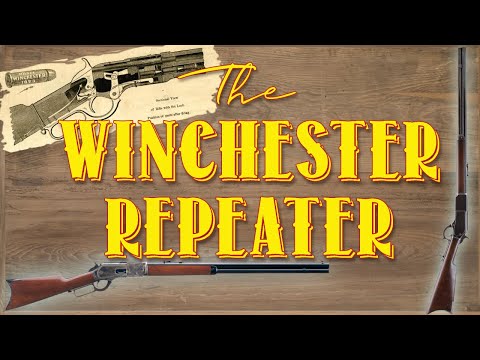
Another fun video from our friends at Arizona Ghostriders.
